

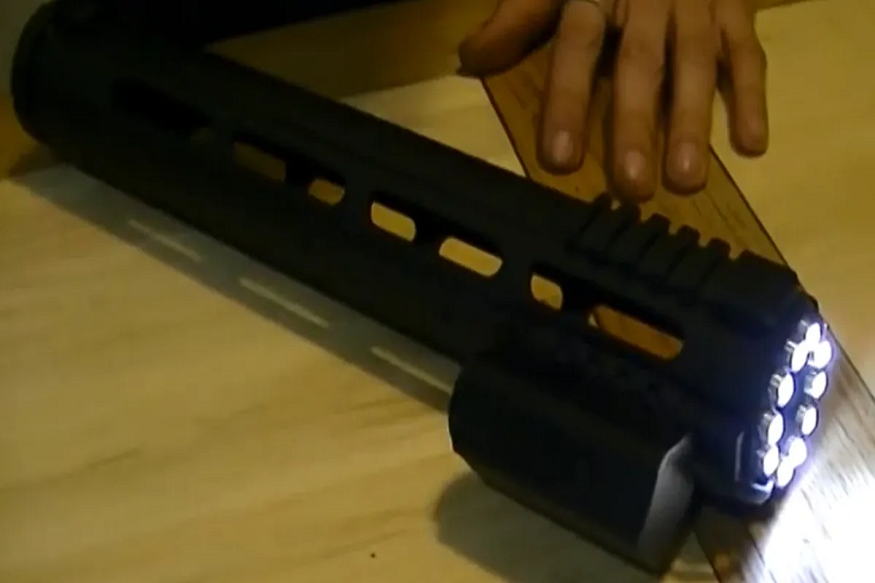
Your home defence needs a light for self-defence and safety. Proper lighting helps protect your home and loved ones. Your home defense light setup is a weapon-mounted light that enables you to search for potential threats and encounter them to save your life. When people emphasize the use of light in home defence, they are actually referring to having enough vision to make wise choices. Information is lost in darkness. Mistakes are more likely to occur when you lack the necessary information to make an informed decision. The primary goal of using light in home defence is to make things clear enough to allow for identification, sound judgment, informed decision-making, and—above all—restraint.
Light is a safety tool that gun owners should understand, especially those who are new to defensive preparation. Light facilitates identification. The use of light can help prevent tragic mistakes. Light plays an important role in deciding when force is not appropriate.
This guide aims to clarify the importance of light, how it fits into responsible home defense, and how to consider handheld and weapon-mounted lights without becoming bogged down in strategy or equipment choices.
Why Light Is Important in Home Defense
Inside a home, the majority of defensive events take place in dim or uneven lighting. At night, common areas, hallways, and bedrooms often show up completely different from how they do during the day. Low light and stress cause shadows to change, familiar shapes to become unclear, and depth perception to deteriorate. In these conditions, the lack of light can hinder judgment and raise the possibility of misidentification.
Light is a useful tool for home defense in this situation. The use of light in home defense helps with information restoration. You can see hands, faces, and context when there is light. It makes it easier to determine whether a sound was coming from a human, a pet, or something completely unrelated. While light cannot fix every issue, it can reduce uncertainty and save decisions from being made that cannot be undone.
Crucially, light encourages caution as well. It is commonly feasible to resolve a well-defined problem without resorting to force. In most situations, a peaceful conclusion is as important as any defensive capacity.
First, Positive Identification
In home defense, positive identification refers to becoming aware of who or what or person you are looking at before taking action. It takes more than just identifying a silhouette or drawing conclusions from movement and sound to ensure identification when using light in home defense.
Light and Stress-Related Decision Making
Stress makes one less aware. It gets narrower in low light. People often fall back on routines and presumptions when both happen at the same time. People make decisions based on guesswork rather than careful consideration.
Light restores visual information, interrupting that process. Light offers context, which can support or contradict the information your brain is already attempting to process. Anything that can suitably slow down decisions long enough for judgment to catch up is advantageous. This clarity often results in de-escalation.
Handheld vs Weapon-Mounted Lights
Discussions over handheld versus weapon-mounted lights often lead to product-related topics. Which is superior, Light A or Light B? However, conceptually, the distinction is less complicated. Each method alters the relationship between lighting and handling a firearm.
Handheld Lights
A handheld light separates illumination from muzzle direction. This allows you to identify what you are looking at without firing a pistol. That separation can be advantageous in a home where family members are present and mobility is unexpected.
Weapon-Mounted Lights
A light attached to the weapon synchronizes illumination with the weapon. The muzzle also covers the lit region when the light is turned on. This can make duties easier while under pressure, but it requires constant trigger discipline and close attention to muzzle direction.